From gimmick to agentic tool
LLMs, or AI in general, are now indispensable in both private and business life. Few
technologies have developed as fast and as disruptively in recent years as
artificial intelligence. Chatbots started out as a toy for nerds or poorly built
support assistants on websites, but AI as a tool, and the content it generates, has
long since reached everyday life: traffic reports on the radio are read out by an AI
voice, classic search queries can finally be phrased in natural language, and more
than a few school assignments get a (not entirely legal) boost from AI.
In the business world, too, the journey has moved well beyond the simple chatbot.
It's no longer just about typing questions or search terms into a chat interface.
Today it's mainly about connecting different services through their interfaces and
letting them get tasks done together. The two biggest providers, OpenAI and
Anthropic, keep pushing their clients further toward agentic tools: you can have
your next appointments displayed, place an order, or have your download folder
cleaned up automatically. And so that an AI can communicate with other services,
tools, and data sources easily and consistently, Anthropic introduced the
Model
Context Protocol (MCP) in late 2024. MCP is an open
standard, and there are already many SDKs available to implement it in various
programming languages.
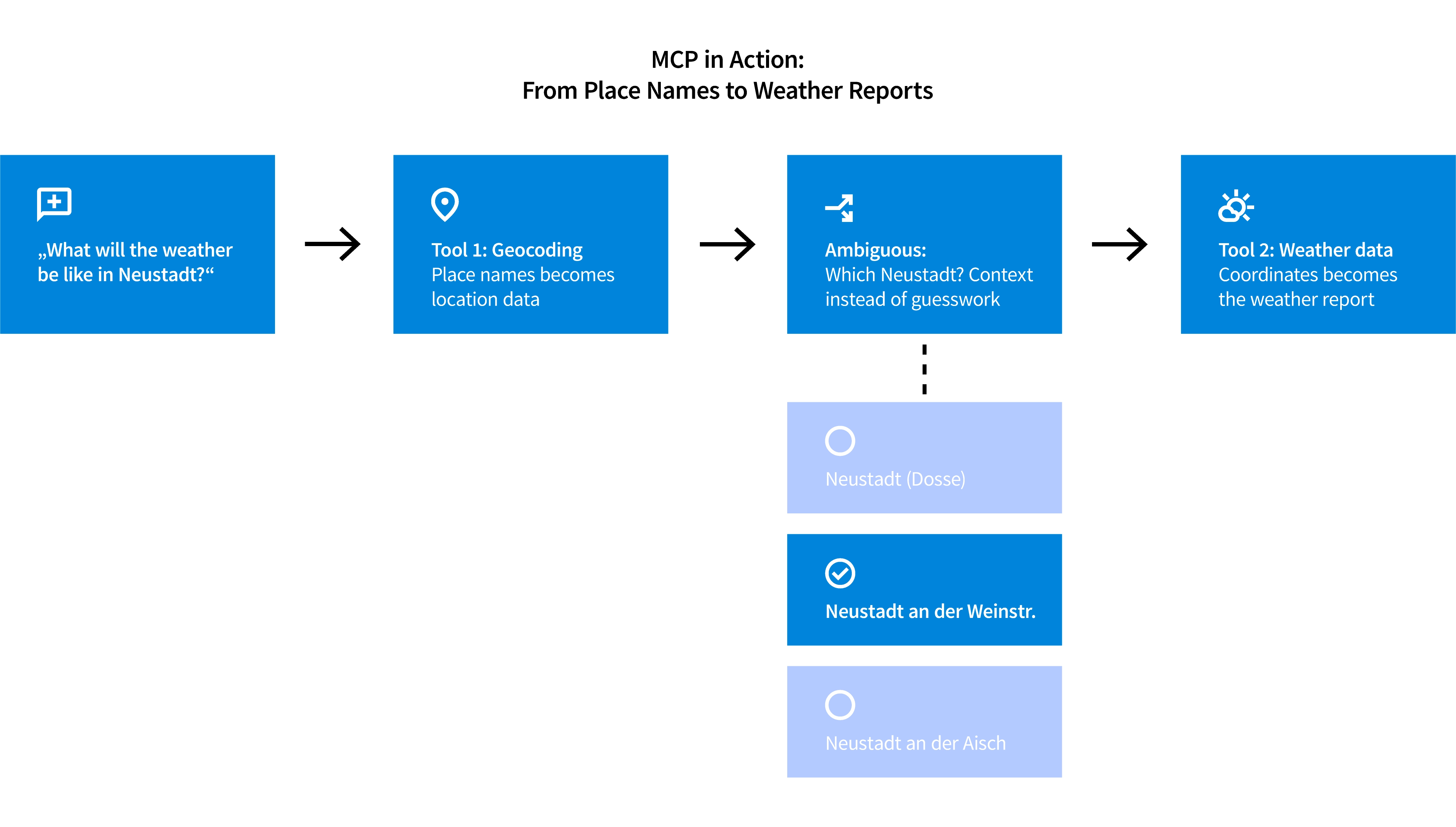
Figure 1: Good tools don't just deliver data – they take the
next step
The weather example: simple isn't the same as finished
At let's dev, we started early on connecting our own and third-party services through
MCPs and hooking them up to LLMs (by the way, we always design our own solutions so
that they meet the data sovereignty criteria
of the EU AI Act). And as tempting as MCP's promise is, to simply connect
services and tools together, the devil is naturally in the details here too.
Admittedly, building a first version of such a server is really quite easy. Let's say,
for example, you want to teach the chat client of your choice to look up the current
weather report for a specific location. For that, you could pick a service like
OpenWeatherMap.
The service offers an API that does exactly what we need. However, the "normal"
API call to OpenWeatherMap expects the location in the form of WGS-84-compliant
coordinates. Unless you happen to know the coordinates of your favorite or vacation
spots by heart, you actually need one more call that converts a city name into
coordinates. And now you need a second MCP that provides a corresponding geocoding
service. On top of that, when defining the MCP-compliant protocols, you have to make
sure the calling LLM understands how to combine the services with each other. A
simple "provides weather data for a location" and "converts city names into
location data" isn't enough — especially considering that the answer to the
question "What is the location of Springfield?" isn't unambiguous, but a list with
more than a dozen entries. Without further clarification, there's simply no good
solution here. Sure, a chatbot would probably just ask you which Springfield you
actually mean. But wasn't the whole point of automation to avoid exactly these kinds
of follow-up questions?
This is exactly where it gets interesting: for an AI, or agentic AI, to truly benefit
from other services and their combination, you have to think carefully about the
design of the MCP interfaces. We too have learned that this is quite a bit more than
"simply" wrapping the API.
Looking for your own MCP server?
Whether it's building something new, installing, or extending an existing
MCP server: at let's dev, we support you with everything related to MCP,
LLMs, and AI integrations.
Get in touch – we're happy to advise you on your individual use case.
A tool, not a wrapper
MCPs shouldn't be thought of as thin API wrappers, but as tools built for agents. Anyone
who just exposes endpoints bluntly ends up with tools – not dynamic, intelligent
working tools. Only those who also design role, timing, and result semantics get
genuinely useful collaboration between tools. And that's ultimately what matters to
us: we define the task, the "what" – but the tools themselves should figure out and
negotiate the actual execution, the "how."
Why writing a good MCP is harder than it looks
This is exactly where many teams underestimate the effort involved. An MCP server that
just passes an endpoint through 1:1 can be built in a few hours – and that's exactly
what makes it tricky. It looks finished, seems to work fine in the first test, and
yet it still falls apart in practice later on, as soon as an agent actually uses it
on its own.
A few of the difficulties we keep running into:
Semantics, not syntax. A tool schema that's syntactically correct
doesn't tell an LLM anywhere near enough about when it should be used and when it
shouldn't. Two tools whose descriptions are too similar lead to an agent picking the
wrong one or mixing both up – a problem that only shows up once you actually test the
server with a real agent and realistic tasks, not in an isolated unit test of a
single function.
Error cases are the real design space. The happy path of a tool is
usually written quickly. The real work lies in what happens when a request is
ambiguous, an external service doesn't respond, or a result stays incomplete. Should
the tool then throw an error, return an empty response, or ask a follow-up question on
its own? Each of these decisions fundamentally changes how well an agent can work with
the tool – and can't simply be bolted on afterwards without rethinking the interface
from scratch.
Security and trust boundaries. As soon as an MCP doesn't just deliver
data but itself accepts or processes content from outside – a URL, a document, an
email – the trust boundary shifts. Who guarantees that an agent doesn't accidentally
process unsafe content, or that instructions hidden in a document don't manipulate the
agent itself? Such questions are often simply overlooked in early MCP implementations,
because they never came up in the original service's API design.
Interplay between multiple MCPs. As soon as several MCP servers need
to work together to solve a task, as in the weather example above, dependencies arise
that no single server can resolve on its own. How granular do results need to be so
that another tool can process them directly? How do you handle ambiguous intermediate
results without the system simply guessing in the end? These are design questions that
go far beyond a single interface.
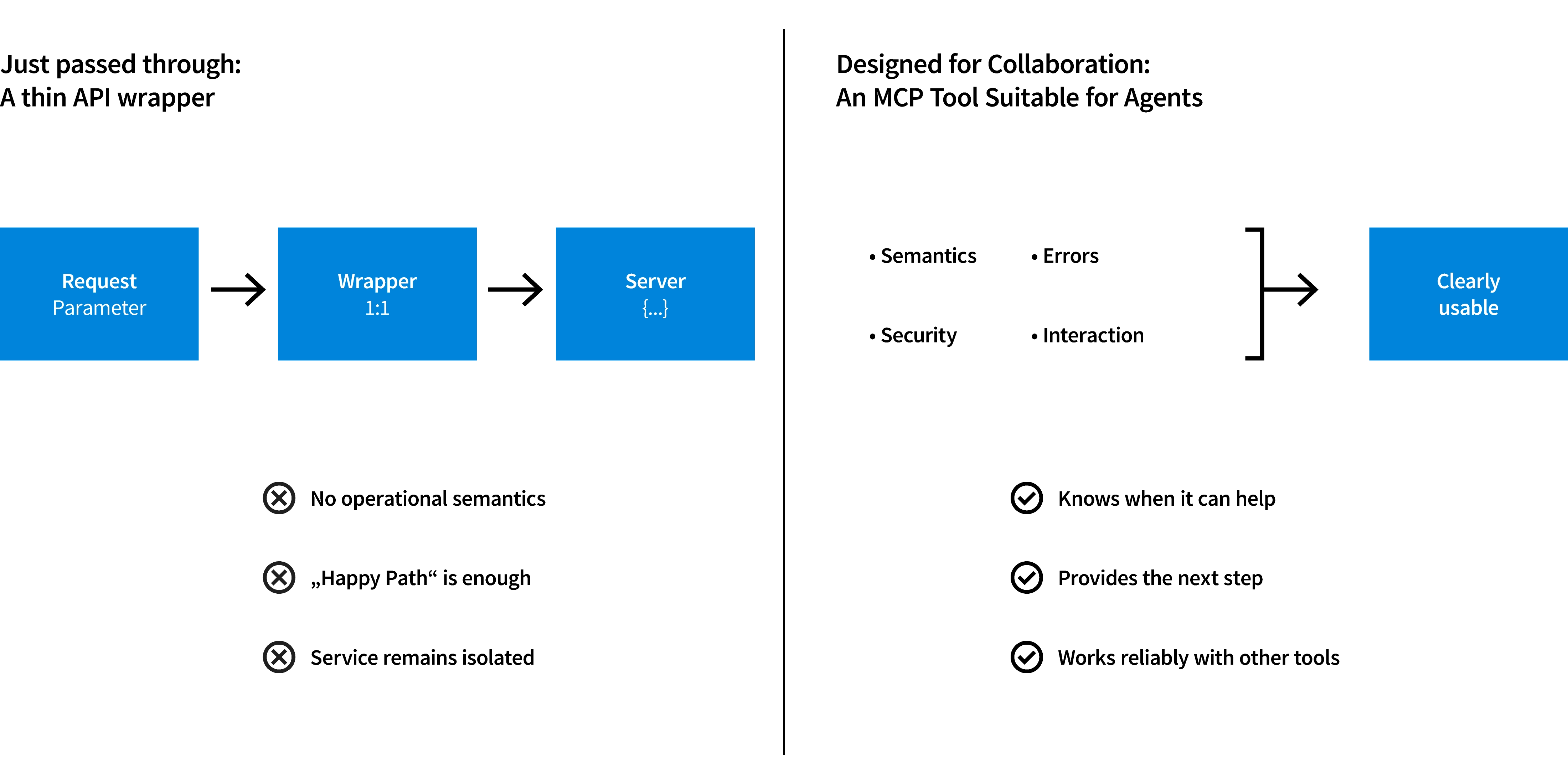
Figure 2: Just passed through vs. designed for real
collaboration
At let's dev, we now build a whole range of MCP servers – for internal as well as
externally connected services – and it's precisely out of this repeated practice that
clear, shared principles have emerged for us: tools are never designed in isolation,
but always with an eye to how an agent will actually use them within a larger chain.
Error cases are considered from the start, not added on afterwards. And recurring
building blocks – from the basic server scaffold to unified response formats to
security mechanisms – we bundle into a shared internal library instead of reinventing
them in every new project. That means a new MCP at let's dev never starts from zero,
but builds from day one on a foundation shaped by real, hard-won lessons from previous
servers. Our experience in this field lets us build new MCPs quickly today, or adapt
existing ones to new standards and circumstances – because of course the Model Context
Protocol itself keeps evolving too. We're also happy to help you build your own MCP,
or maintain and further develop an existing installation –
just get in touch with us.